Made to order · Free UK delivery, 4 to 9 working days

Your bag (0)

    What is plane spotting?

    Plane spotting is watching, photographing and identifying aircraft, usually from public ground near an airport or under a flight path.
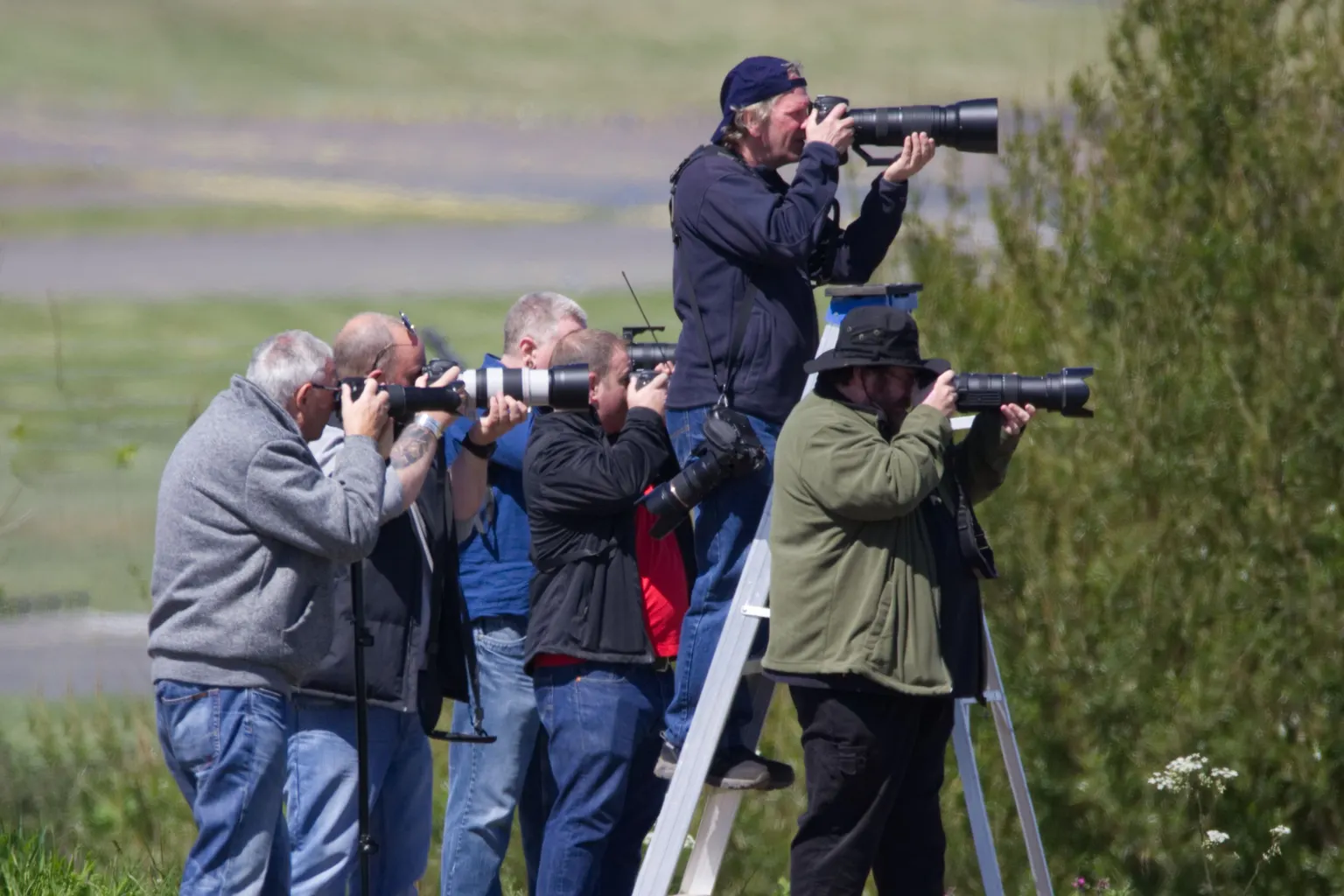
    Five plane spotters with long telephoto lenses, one on a stepladder, photographing aircraft from a grassy bank.
    Photo: Ronnie Macdonald, Wikimedia Commons, CC BY 2.0, cropped.

    At its simplest it's noticing what's overhead.

    What do plane spotters log?

    Many who stick with it go further and keep a record: the type, the registration painted on the airframe, where and when they saw it. Do that for a few years and you've built something that didn't exist before, and that record, more than any single sighting, is usually what people mean when they say they are into it.

    Plane spotting photography vs logging

    Others treat it purely as photography. One quiet afternoon, one clean pass, decent light. Both approaches reward patience far more than they reward equipment. If you do want kit, the plane spotting equipment and apps guide compares apps, binoculars and cameras.

    Plane spotting etiquette: where you can stand

    Stay on public ground, follow the signage, and don't photograph where it says not to. The goodwill that makes spotting easy depends on spotters behaving. It's a small thing to ask and it keeps the door open for whoever comes next.

    Knowing the runway in use saves an entire wasted afternoon, and that comes straight out of what a runway is. Telling one family of aircraft from another is the types of aircraft. The settings and the standing-in-the-right-place part are in the plane spotting photography guide, one stage further along, and one airport's viewing places and rules are in plane spotting at Heathrow; Gatwick, Stansted and RAF Fairford have guides of their own. The places their operators publish across the rest of the UK are in plane spotting in the UK.
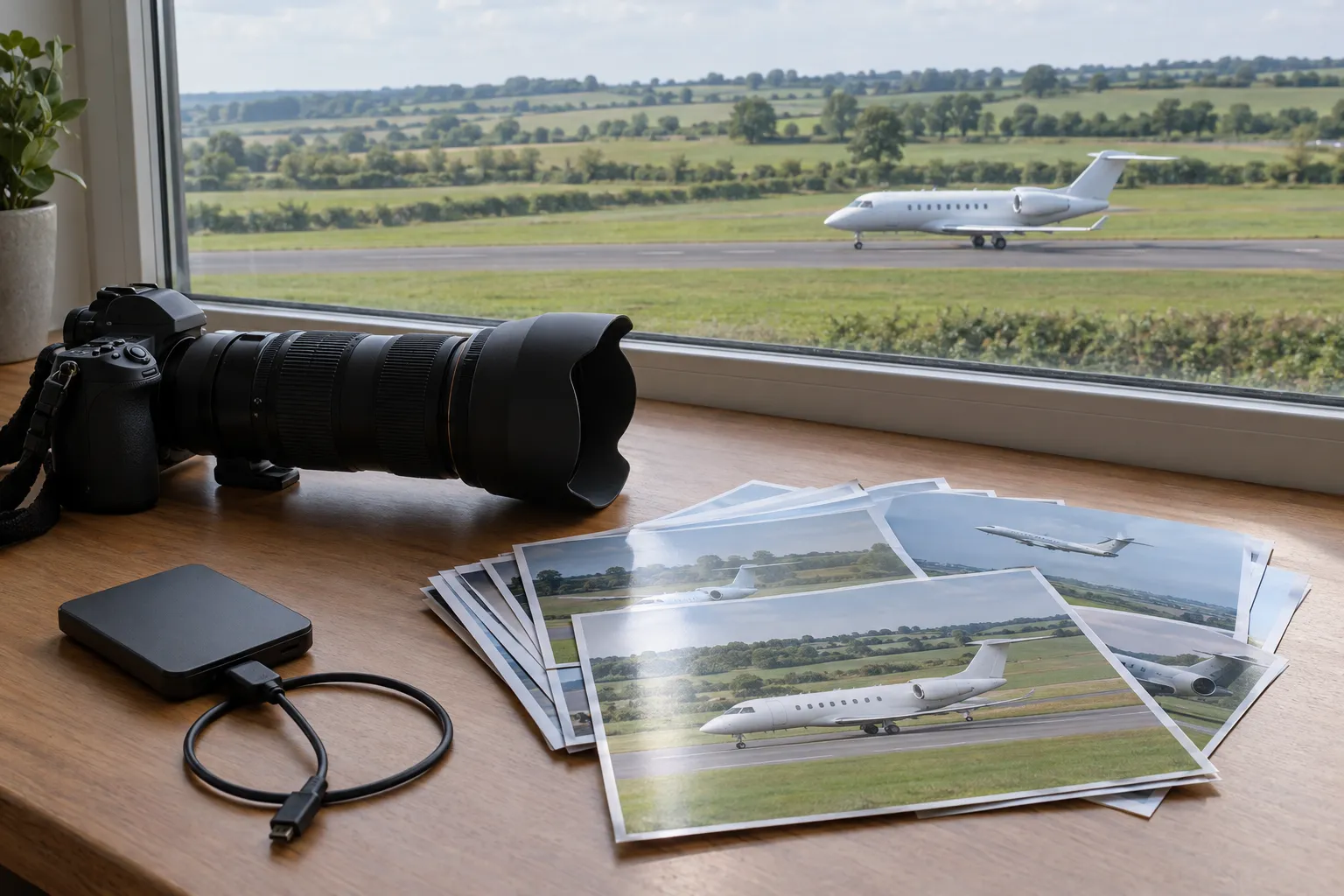
    A camera with a telephoto lens, a portable hard drive and a fan of aircraft photographs on a desk.
    A fan of aircraft photographs on the desk, beside the camera and a hard drive.

    And once the photographs exist, they mostly sit on a drive. Your aircraft is the stage about doing something with them, and buying for somebody who spots is its own problem, covered in gifts for plane spotters. The rest of the reading is on the sky.

    More on the hobby

    What is plane spotting?
    Watching, photographing and identifying aircraft, usually from public ground near an airport or under a flight path. Many who stick with it keep a record of type, registration, date and place.
    Do you need expensive equipment?
    No. Both the logging and the photography sides reward turning up often far more than they reward equipment.
    What do plane spotters write down?
    Many keep a record of the type, the registration painted on the airframe, and where and when they saw the aircraft.
    Where are you allowed to stand?
    Public ground. The etiquette matters more than the gear, and it is what keeps airports tolerant of people standing at the fence.
    Is plane spotting legal in the UK?
    Where you stand is what the law cares about. The GOV.UK guidance on section 5 of the National Security Act 2023 says photography from public rights of way and access land is not affected by the Act, unless a local restriction on photography applies. The offence it covers is unauthorised entry to a prohibited place, such as a military airfield. Airports have byelaws of their own, which the Heathrow guide sets out for that airport.
    Is plane spotting a hobby?
    Yes. In 2004 BBC News reported a Heathrow scheme for plane spotters, backed by Scotland Yard. Heathrow's airport security manager said they wanted "genuine enthusiasts" to be "able to enjoy their hobby" despite extra security measures. Under the scheme, spotters who signed up would be given an identity card and agree to a code of conduct.
    What are plane spotters called?
    Spotters, plane-spotters or aviation enthusiasts: BBC News used all three in one 2004 report. The word is older than that. Aeroplane Monthly says The Aeroplane Spotter, a journal devoted exclusively to "the study and practice of aircraft recognition", carried a Spotters Glossary "from January 1940 onwards". English Heritage says the Royal Observer Corps, formed in 1925, played a critical role in the Second World War spotting and identifying planes. English Heritage says most of the Corps stood down on 30 September 1991; the RAF Benevolent Fund gives 1995 as the year it stood down from its duties.