The aircraft print
A photograph you took of one particular aircraft, redrawn in one of five styles and printed in the UK. You see it and approve it before any money moves.
Everything about this product follows from one decision, which is that the input is a photograph you already own. Not a stock library, not a description you type, not a lookalike of the type. The aircraft they flew, the trainer they learned on, the departure shot somebody waited all afternoon at the fence for.
That constraint is the reason it works as a gift. A generic aeroplane picture is a decoration. A picture of that airframe, on the day somebody stood there and took it, is a different object entirely, and it's the one that gets hung rather than drawered.
What actually happens
You upload one clear shot and pick a style. There are five: a technical blueprint in white line on deep blue, a vintage travel poster in flat colour, a minimal ink line drawing, a soft watercolour and a heavier oil. Aircraft art styles explained walks through what each one does to a photograph and which shots suit which.
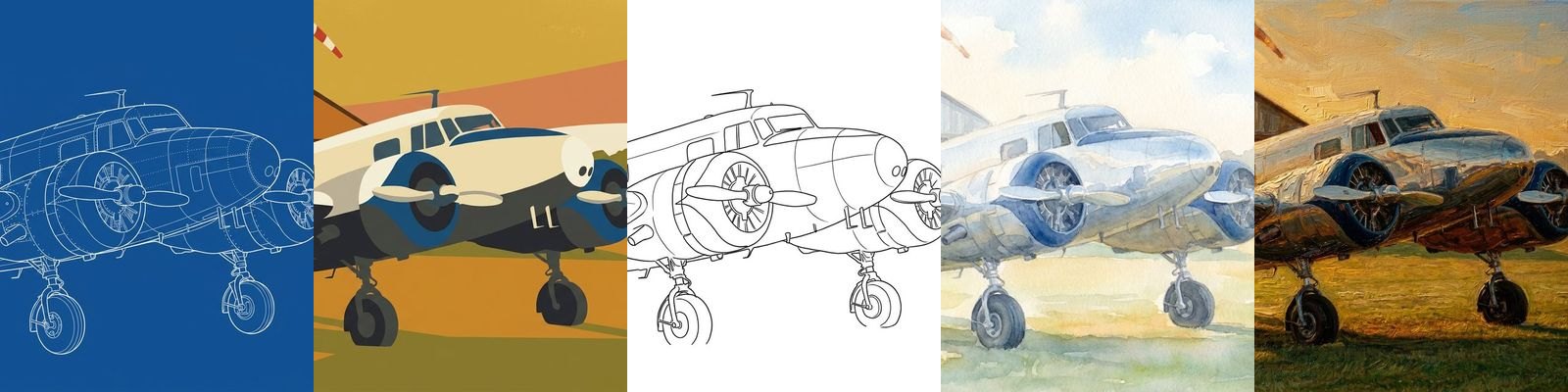
The preview comes back watermarked and costs nothing. Three of them a day, per visitor, so you can try a couple of styles against your actual photograph rather than guessing from a thumbnail. When one of them is right, you tick to say you've looked at the picture and you're happy for that one to be printed, and only then can you add it to a basket. The print is then generated fresh at full resolution with no watermark, so fine detail differs from the preview. The photograph, the style and the framing you saw are what get printed.
What it will not do
It won't invent an aircraft from a description, and it won't rescue a photograph that has nothing in it. It also won't reproduce airline branding, liveries or registrations from anything but your own photograph, which is a deliberate limit rather than a technical one. If your shot is soft or the background is a mess, the blueprint and poster styles cope far better than a straight photographic print does, and turning plane photos into wall art covers how to tell before you commit.
What it gets printed on
Nine surfaces take it, and the choice matters more than people expect: a blueprint restyle wants flat paper, an oil wants the weave of a canvas, and a sharp photograph is the one that earns metal. On the wall takes each surface in turn and says what it physically is. Live sizes and prices sit on the formats page, read from the same rows the checkout charges against.
If there's no photograph to work from, the airport code print is the piece that needs none. And your aircraft is the stage this sits in, if you'd rather read the argument before you upload anything.