The Spitfire aircraft: a short history
The Supermarine Spitfire aircraft is a family of fighters, not one unchanged machine. Its story begins with a prototype in 1936 and continues through different versions, roles and surviving museum aircraft.
The Spitfire aircraft: from prototype to RAF service
The RAF’s Spitfire history names Reginald Joseph Mitchell as its designer, dates the prototype’s first flight to 5 March 1936, and dates delivery of the first Mk I to 19 Squadron at RAF Duxford to 4 August 1938. First flight and first service delivery are different milestones.
The RAF Museum’s Spitfire I collection entry gives another way into the story: a named aircraft type with its own service context. Start with the version the source actually describes, and don't copy a speed or equipment figure as if it applies to the whole family.
The Spitfire in the Battle of Britain
The museum’s Mitchell biography connects the all-metal monoplane fighter with his experience developing fast seaplanes at Supermarine. Mitchell died before the aircraft entered RAF service; the design’s story continued beyond its original designer.
During the summer of 1940, Spitfires helped defend Britain against German air attacks. The museum’s Spitfire I account explains that tactics, pilots and improvements mattered alongside the aircraft itself. Constant-speed propellers and changes enabling the Merlin engine to use 100-octane fuel improved performance. The aircraft was developed in service, not frozen in its prototype form.
Spitfire engines: Merlin and Griffon
The name covers more than the early fighter. The museum’s comparison of a Mk I and a PR XIX describes the later aircraft’s Griffon engine, additional fuel capacity, pressurised cabin and photographic-reconnaissance role. This is a historical source about the aircraft; its 2019 event invitation is not current visitor information.
| Example | Engine family | Role in these sources |
|---|---|---|
| Spitfire Mk I | Merlin | Early fighter associated with the Battle of Britain |
| Spitfire PR XIX | Griffon | Later photographic reconnaissance |
The RAF dates its last operational Spitfire sortie to 1 April 1954, flown by a PR XIX over Malaya. That later reconnaissance work is part of the story too; the family’s service didn’t end with the Battle of Britain.
Identifying a Spitfire in a photograph
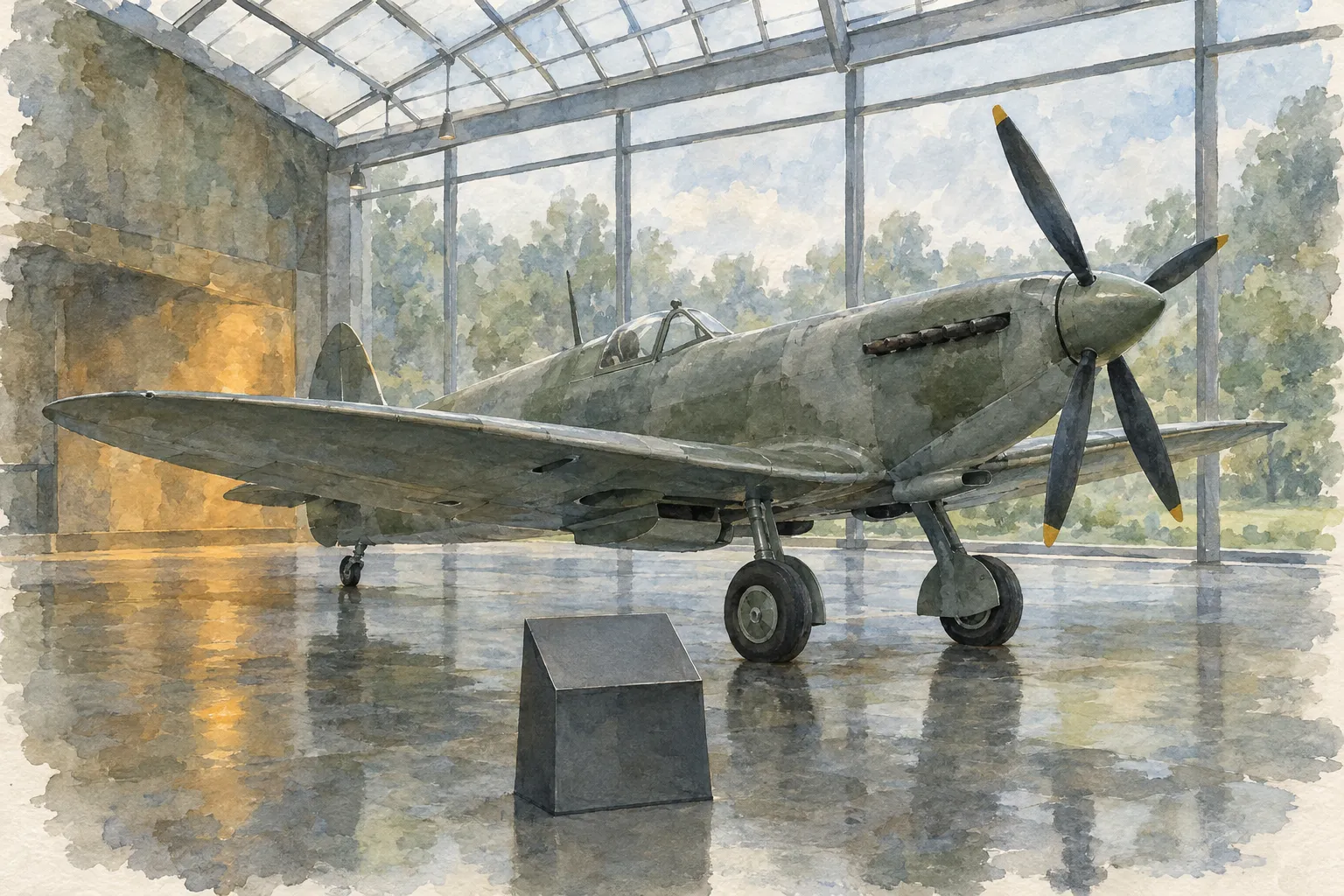
- Look for a reliable caption naming the aircraft or mark.
- Separate the date of the photograph from the date the design first flew.
- Use a museum or official historical record for service details.
- Leave a claim unmade when the available source doesn’t establish it.
For the wider context, types of aircraft explains how different aircraft families do different jobs, while the cockpit explanation introduces the general term without pretending to describe a specific Spitfire interior. The photography guide covers making a clear record of aircraft you see today. If you’re choosing a gift, not reading history, Spitfire gifts explains the photograph, permission and detail checks. A photograph of one can be printed as it was taken or put on a photo mug.