Plane identification: reading an aircraft's markings
Identifying an aircraft starts with the markings rather than the shape. A UK civil aircraft carries a G- registration that anyone can search on the CAA's G-INFO register, and the name a controller uses on the radio isn't always the one painted on the fuselage.
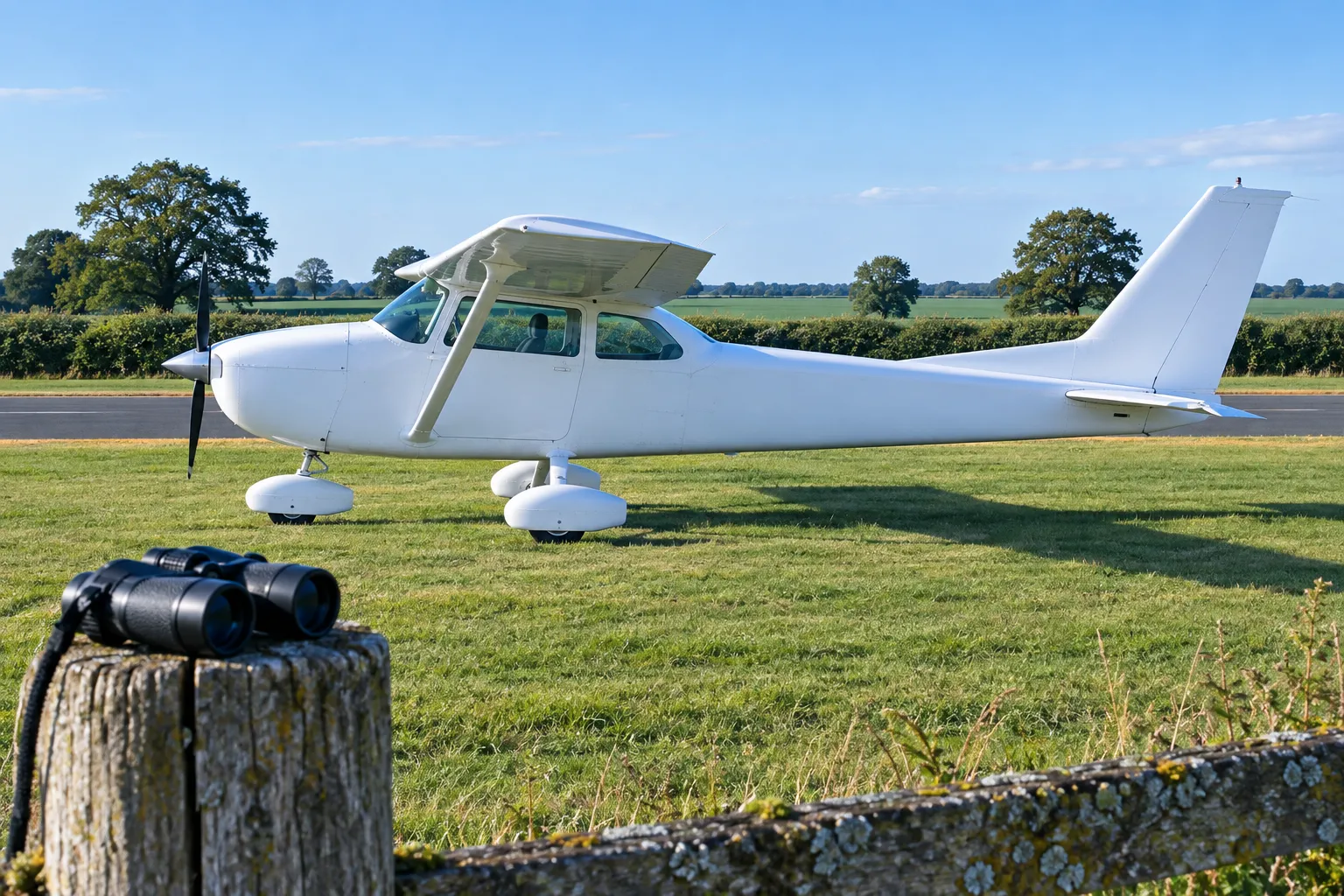
For plane identification, the letters and numbers on an aircraft tell you what it is and where to check it. The sources here are what the Civil Aviation Authority publishes, plus one enthusiast source for military serials, which is named where it's used. Telling models apart by outline is a different skill; types of aircraft covers the legal categories rather than individual designs.
Plane identification by registration: what a UK mark tells you
The letters painted on a UK civil aircraft are its registration mark, and they begin G-. The CAA's policy on UK marks is that any mark in use now, or registered at any point in the past, isn't issued to a second aircraft. An individual airframe may have more than one registration mark in its lifetime, but a particular mark can only apply to one airframe.
Some combinations never appear. Following ICAO Annex 7, the CAA blocks anything that could be mistaken for a distress signal: PAN, SOS, TTT and XXX can't sit in the first or last three letters of a mark. No mark contains a Q, which would clash with the Q code system, or the letters ZC, and offensive combinations can be refused at the Aircraft Registration Section's discretion. Gliders have their own habit. The British Gliding Association's three-letter code becomes the last three letters of the mark, so a glider with the code PXL gets G-CPXL, or G-DPXL if the first is taken.
Looking a registration up on G-INFO
G-INFO is the CAA's online register of UK aircraft. Its guidance page says the CAA is required to keep the register open to inspection, and the field guide lists what you can search on: registration, serial number, aircraft type or name, registered owner, the ICAO 24-bit aircraft address and military serial number.
Three details change how you read a result. The data is meant to be updated at the end of each working day, and the results screen shows the extract date it's accurate to. The tool is read-only, so there's no export. And a registration search returns de-registered aircraft too, whereas the other fields only return aircraft currently on the register unless you tick the box to include de-registered ones.
The owner field needs care. The CAA says it must record the names and addresses of people who appear to it to be qualified to own each aircraft. Read that as a record of registration and don't treat it as proof of who owns the aircraft. A group-owned aircraft shows one name followed by "Trustee of", and a note reading "potential change of registered ownership in progress" means a transaction is under way at the Aircraft Registration Section.
Reading a type designator
The type field uses ICAO's aircraft type designator, a two-, three- or four-character code published in ICAO Doc 8643. The field guide shows how literal it is: an exact-match search for A31 returns only A31, and won't return A310, A318 or A319. A designator is a code to look up, not a nickname.
Why the callsign isn't the painted registration
What's painted on the aircraft and what's said on the radio are different identifiers. The Standardised European Rules of the Air, SERA.14050 in the CAA's regulatory library, recognise three types of radiotelephony callsign for aircraft. The first is the registration. The second is the operator's radiotelephony name followed by the last four characters of the registration. The third is the operator's radiotelephony name followed by the flight identification. So the callsign you hear on a recording needn't match the letters on the tail.
Military aircraft are identified by serials
UK military aircraft are identified by serial numbers: two letters followed by three digits. G-INFO's military serial search uses DF128 as its example, and the allocation tables at UK Serials, an enthusiast resource compiled by the Wolverhampton Aviation Group, list them in batches by letter pair. The CAA's guidance doesn't say which military aircraft its serial search covers.
From the sighting to the log
Spotters usually log the registration and the type together, which is why a clear photograph of the fuselage side is worth more than a dramatic one. Spotting equipment and apps covers what to carry, and plane spotting in the UK lists published places to stand. Squawk codes are a separate identifier, set by the pilot and read off radar; what a squawk code is explains them. Once you've worked out what you photographed, the photo print keeps the markings exactly as they were on the day, and turning plane photos into wall art covers sizes and materials. For somebody who keeps a log of these sightings, gifts for plane spotters is the gift page, and aviation gifts sorts the other recipients. The wider reading sits in the sky.