The Aviation Gift Co.

Your bag (0)

Crosswind calculator

Enter the runway and the wind and see the crosswind and headwind in knots, gusts included, for both ends of the runway.
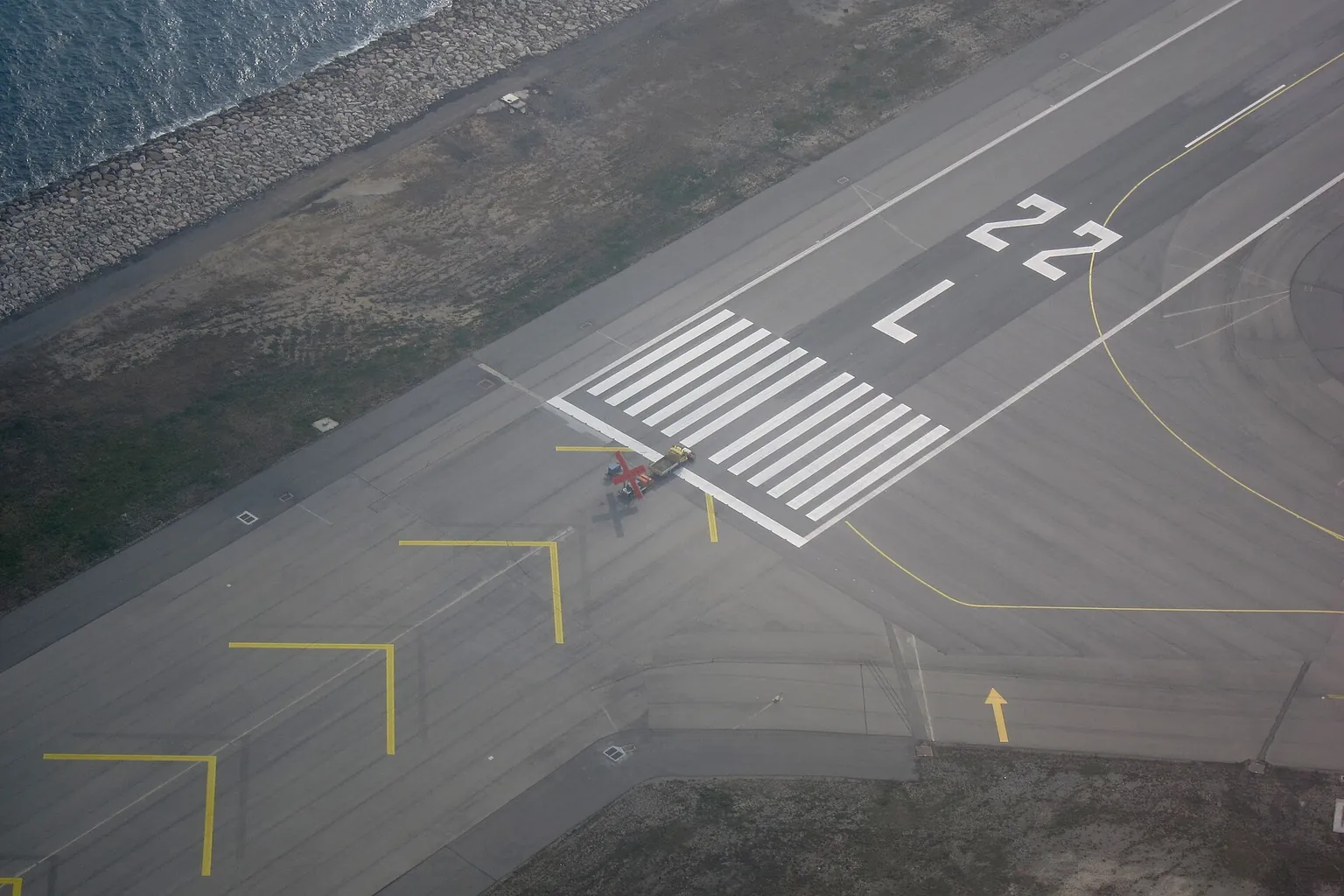
An aerial view of a runway threshold by the sea, the markings 22 and L painted beyond white stripes.
Photo: Olivier Cleynen, Wikimedia Commons, CC BY-SA 4.0, cropped.

Enter a runway and a wind, for example runway 27 with a wind from 300 degrees at 20 knots.

Crosswind at a glance

Knots across the runway for each wind speed and angle off the runway, worked out with the same sums as the tool.

Angle off the runway10 kt wind15 kt wind20 kt wind25 kt wind
10°2 kt3 kt4 kt4 kt
20°3 kt5 kt7 kt9 kt
30°5 kt8 kt10 kt13 kt
45°7 kt11 kt14 kt18 kt
60°9 kt13 kt17 kt22 kt
90°10 kt15 kt20 kt25 kt

Put it on your club's website

Flying clubs, schools and cadet squadrons are welcome to use this calculator on their own sites. Copy the code below into any page that accepts HTML. It shows the calculator and the table, with no shop and no cookies.

Their home airfield, on a print

Type the airfield's code and its name and position fill in. Pick a size and add it to your bag.

£17.99A4 · Poster

EDI EDINBURGH · UNITED KINGDOM 55.9501° N, 3.3723° W
Preview drawn from the print's own template and typeface. It shows EDI until you type.

Airport name, country and coordinates
Background
Format
Frame
Frame
Size

Free UK delivery. 4 to 9 working days.

  • Made to order
  • Arrives damaged or with a print fault? We reprint or refund it at our cost.
  • Secure payment by Stripe
  • Changed your mind? Send it back unused within 14 days of delivery
  • The file is emailed to you as a download link that stays live for 30 days
  • You can cancel within 14 days unless you ask us to send the file at once and confirm you lose that right
  • Secure payment by Stripe
What goes on each line

The airport code, large, as you type it. Below it, the airport name and the country in capitals, joined by a middle dot. Then the coordinates, exactly as typed. A long line is set smaller so it stays on the item; a line still too long for the item is named before you can add it.

Delivery and returns

Delivery times by format, how to report a fault and what we reprint are all on the delivery and returns page.

Getting the file

Save the file somewhere safe once it arrives. If anything looks wrong, reply to that email and we will put it right.

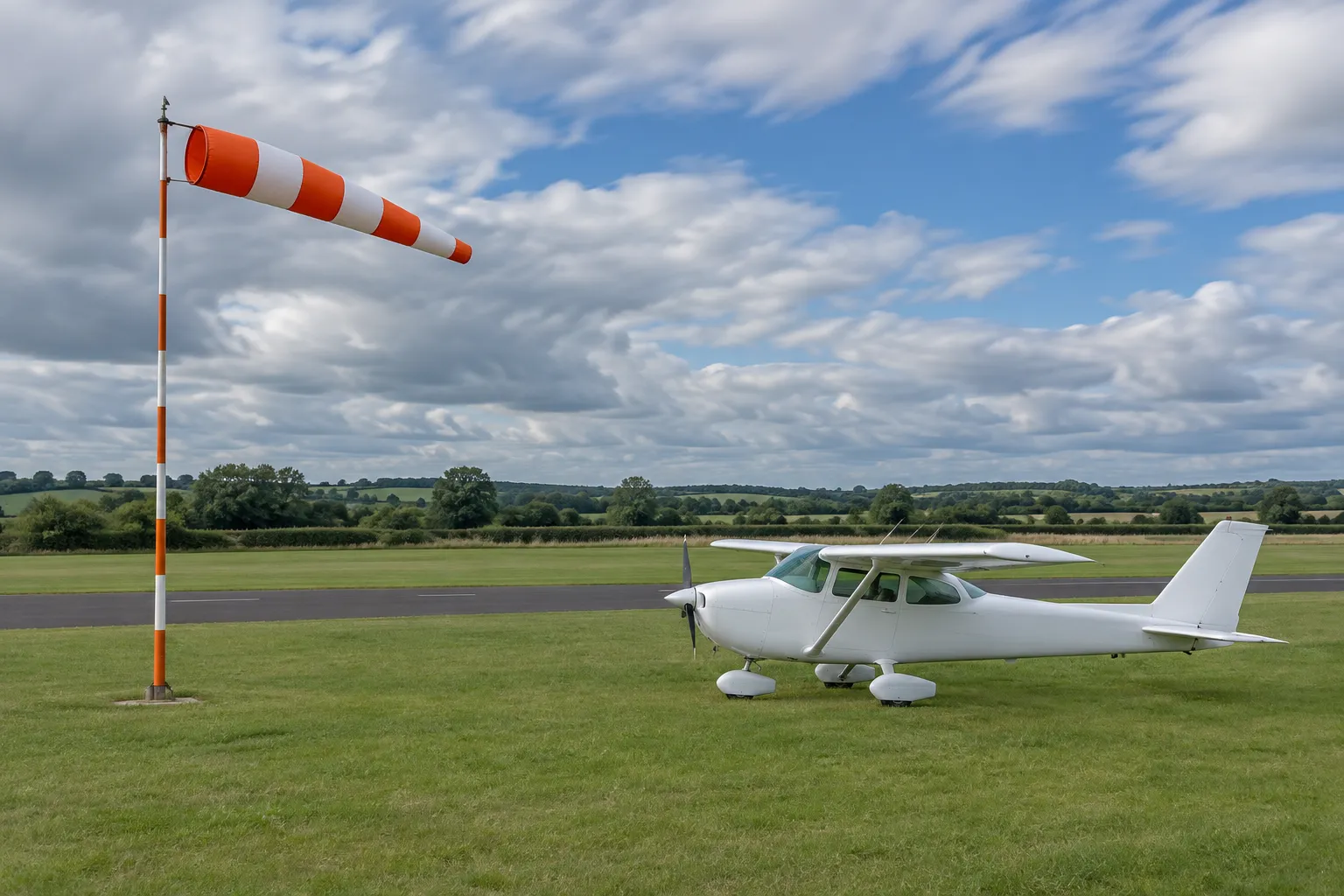
An orange and white windsock filling in the breeze beside a grass airfield, a white high-wing aircraft parked on the grass.
The windsock shows it at a glance. The calculator puts numbers on it.

What crosswind and headwind mean

Aircraft take off and land into the wind where they can, because a headwind shortens the run. The wind rarely lines up with the runway, though. Some of it blows straight down the runway, the headwind, and some blows across it, the crosswind. A crosswind tries to push the aircraft sideways, so pilots need to know how strong it is before they land.

How it is worked out

First, find the angle between the wind and the runway. The crosswind is the wind speed times the sine of that angle, and the headwind is the wind speed times the cosine. For example: runway 27 points 270 degrees, and the wind is from 300 degrees at 20 knots, so the angle is 30 degrees. The sine of 30 degrees is exactly a half, so the crosswind is 10 knots from the right. The headwind is about 17 knots.

Many instructors teach a quick mental version called the clock method. Count 15 degrees off the runway as a quarter of the wind across, 30 degrees as half, 45 degrees as three quarters, and 60 degrees or more as all of it. It's an approximation for the cockpit; the calculator gives you the exact figure.

Runway numbers and wind directions

A runway's number is its direction to the nearest ten degrees, with the last zero dropped, so runway 27 points roughly west. The runway at the other end has the opposite number: 27 and 09 are the same strip of tarmac. Parallel runways add L, C or R for left, centre and right.

One thing to watch: runway numbers use magnetic north, and so does the wind the tower or ATIS gives you. The wind in a METAR uses true north. In the UK the difference between the two is small, but in some parts of the world it is many degrees, so use the tower's wind with the runway number when it matters.

Gusts

If the wind is gusting, put the gust in too. The calculator works out the crosswind at the steady wind and at the gust, because the gust is the one that catches you out in the last few feet. Always check your aircraft's handbook and your own or your instructor's limits.

A runway of your own

Pilots tend to have a favourite airfield. The airport code print sets its code in big type with the name and position beneath.

Questions, answered

Can I put the calculator on my club’s website?
Yes. Under the calculator there is a short piece of code to copy into any page that accepts HTML. It shows the calculator and the table, with no shop and no cookies.
How do you work out a crosswind?
Multiply the wind speed by the sine of the angle between the wind and the runway. A 20 knot wind 30 degrees off the runway gives 10 knots across, because the sine of 30 degrees is a half.
What is the clock method?
A quick mental approximation: 15 degrees off the runway is about a quarter of the wind across, 30 degrees half, 45 degrees three quarters, and 60 degrees or more all of it.
Can I paste the wind from a METAR?
Yes. Paste a wind group like 27015G25KT and it fills in the direction, speed and gust. Remember METAR winds use true north, while runway numbers and the tower wind use magnetic north.
What does a negative headwind mean?
A tailwind: the wind is behind you on that runway. The calculator shows both runway ends so you can see which one has the headwind.