How fast do planes fly?
NASA's own figure for today's larger airliners is roughly 600 mph, which it puts at about 80 per cent of the speed of sound.
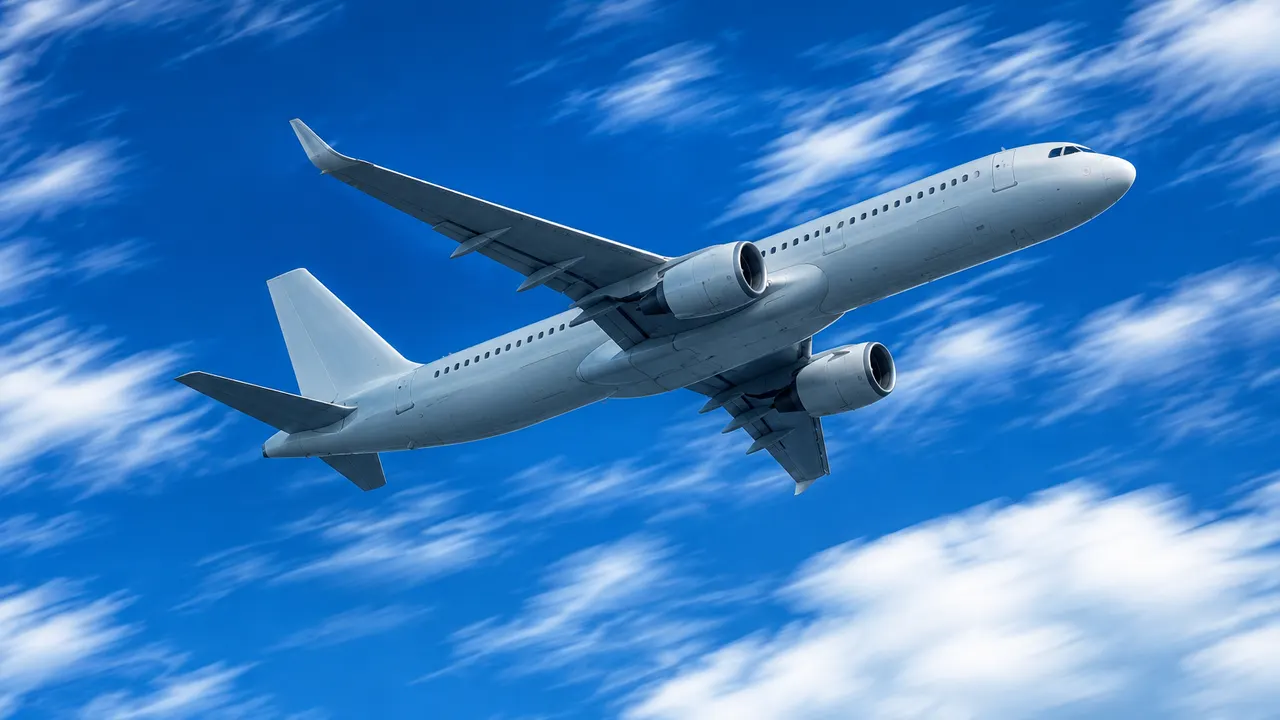
That comes from NASA Glenn, writing about what a much faster passenger aircraft would take: today's larger airliners cruise at roughly 600 mph, or about 80% of the speed of sound. Eighty per cent is the interesting half of that sentence, because the speed of sound is not a fixed number.
Why the number moves
The FAA's high altitude circular gives the arithmetic. At sea level on a standard day the speed of sound is approximately 660 knots, and it falls with temperature all the way up to about 36,000 feet. The same Mach number therefore corresponds to a different true airspeed as the local speed of sound changes. It does not determine ground speed by itself.
Airspeed and ground speed are different
NASA's relative-velocity explanation separates motion through the air from motion over the ground. Wind changes the relationship between them. A tailwind can increase ground speed without the aircraft travelling faster through the surrounding air; a headwind can do the opposite. Compare the same type of speed when comparing two flights.
Wind moves it again. The same circular describes the jet stream as a narrow band of high-altitude winds that usually runs eastward between 50 and 200 knots, which is why the westbound leg of a return trip so often takes longer than the outbound one. The aircraft's speed through the air barely changes. The ground underneath it does.
All of which is a long way of saying that speed in aviation is quoted in knots, and a knot isn't a mile per hour. That's covered in what a knot is. The altitude that makes all this work is in how high planes fly, and the rest of the reading sits on the sky.
The fastest jet, and Concorde
The National Air and Space Museum calls the SR-71 the world's fastest jet-propelled aircraft. Its entry for the Blackbird says that on 6 March 1990, its final flight, Los Angeles to Washington, DC took 1 hour 4 minutes 20 seconds, an average of 2,124 miles per hour. An average over the whole flight is not a top speed. Concorde flew at Mach 2.0 on the Science Museum Group's account, and the Concorde story gives her crossing times. The aircraft that hold the size records are in the largest aeroplane in the world.
If the reader is a plane lover you are buying for, gifts for plane lovers starts from the aircraft rather than its speed.