Plane spotting apps and equipment: what helps first
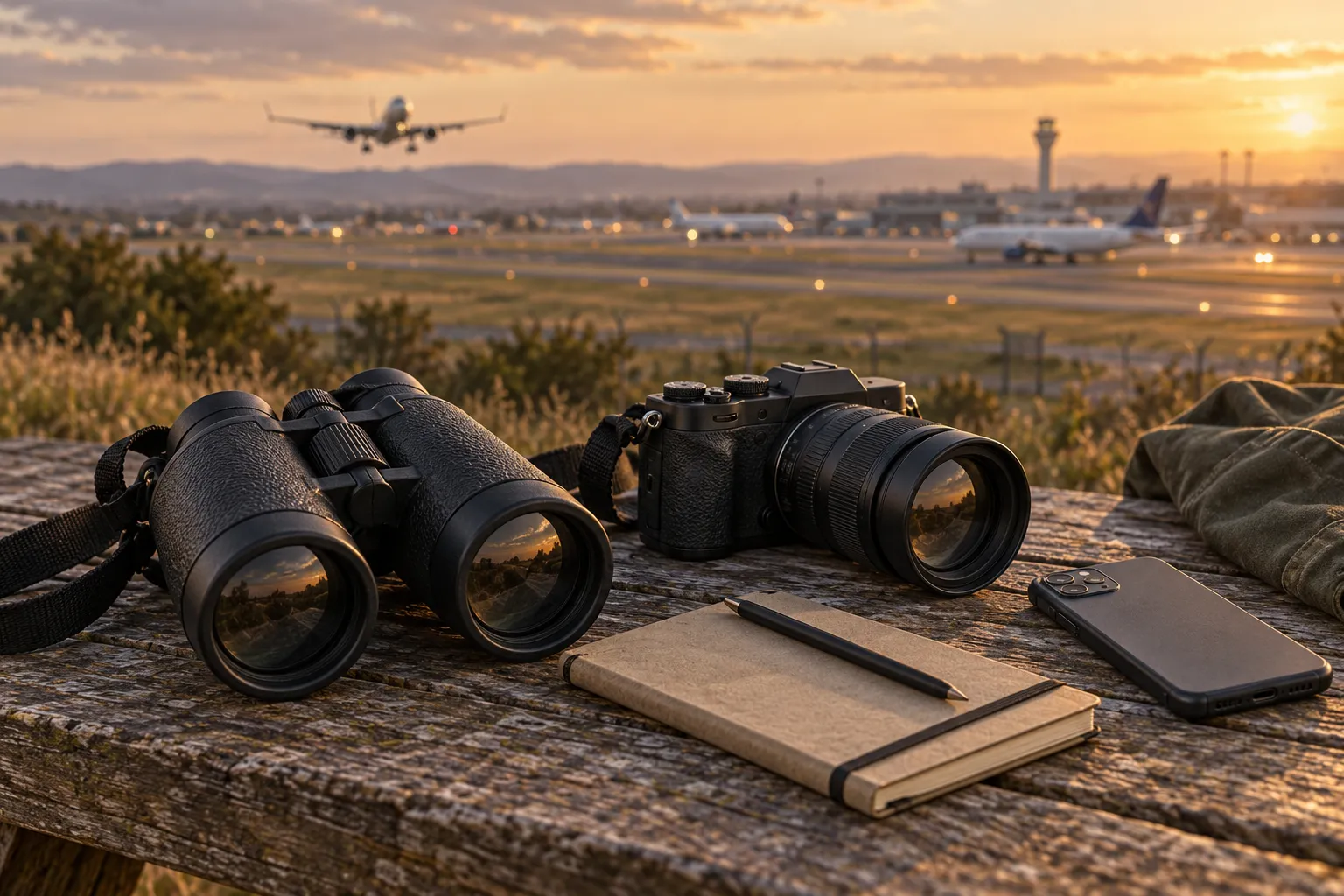
Plane spotting apps and equipment come down to three jobs: an app helps identify a flight, binoculars help you observe it, and a camera helps you keep a picture. Choose the task first: buying more equipment does not fix an inaccessible location or guarantee a sighting.
Plane spotting equipment: start with the task
| You want to | Useful tool | What it cannot guarantee |
|---|---|---|
| Identify a passing flight | Flight-tracking app | Every aircraft appearing or every displayed position being live |
| See aircraft detail | Binoculars | A clear view through obstacles or access to a better location |
| Keep a photograph | Camera and suitable lens | A sharp result without practice or appropriate light |
Plane spotting apps: understand the map before trusting it
Flightradar24 explains its sources as a mix of ADS-B, multilateration and other tracking data. Its app information notes that aircraft can be absent because of equipment or coverage. A missing marker isn’t proof that the sky is empty.
The service also explains estimated positions when aircraft leave coverage. Check what a symbol or track represents before treating it as a current observation. When comparing apps, look at coverage where you actually visit, identification detail, estimated-position labelling and whether the features you want are included. We don’t sell a tracking service or provide a live feed.
Four flight-tracking apps compared
All four put aircraft on a live map from the same kind of signal: ADS-B, which the aircraft broadcasts itself. Where they differ is who runs the receivers and what fills the gaps. This is how each describes its own data, checked on 14 October 2026.
| App | Where its data comes from | Worth knowing |
|---|---|---|
| Flightradar24 | ADS-B, multilateration and other tracking data | Shows estimated positions once an aircraft leaves coverage |
| FlightAware | Radar and flight plans from air navigation providers, airline feeds, and two ADS-B networks: over 30,000 ground receivers hosted by its users, and satellite ADS-B from Aireon | Strong on flight status as well as position |
| Plane Finder | A network of feeds and radars receiving ADS-B and MLAT, plus FAA data | Aircraft shown in orange come from a delayed FAA feed; some smaller and older aircraft lack the equipment to appear |
| ADS-B Exchange | Receivers set up by volunteers, sent to one public map | Describes itself as unfiltered and uncensored |
None of them can show an aircraft that isn’t transmitting, or one flying beyond the reach of any receiver, which is most often low down near a small airfield. Try two at the spot you actually visit and keep the one whose coverage holds up there.
Binoculars: compare more than magnification
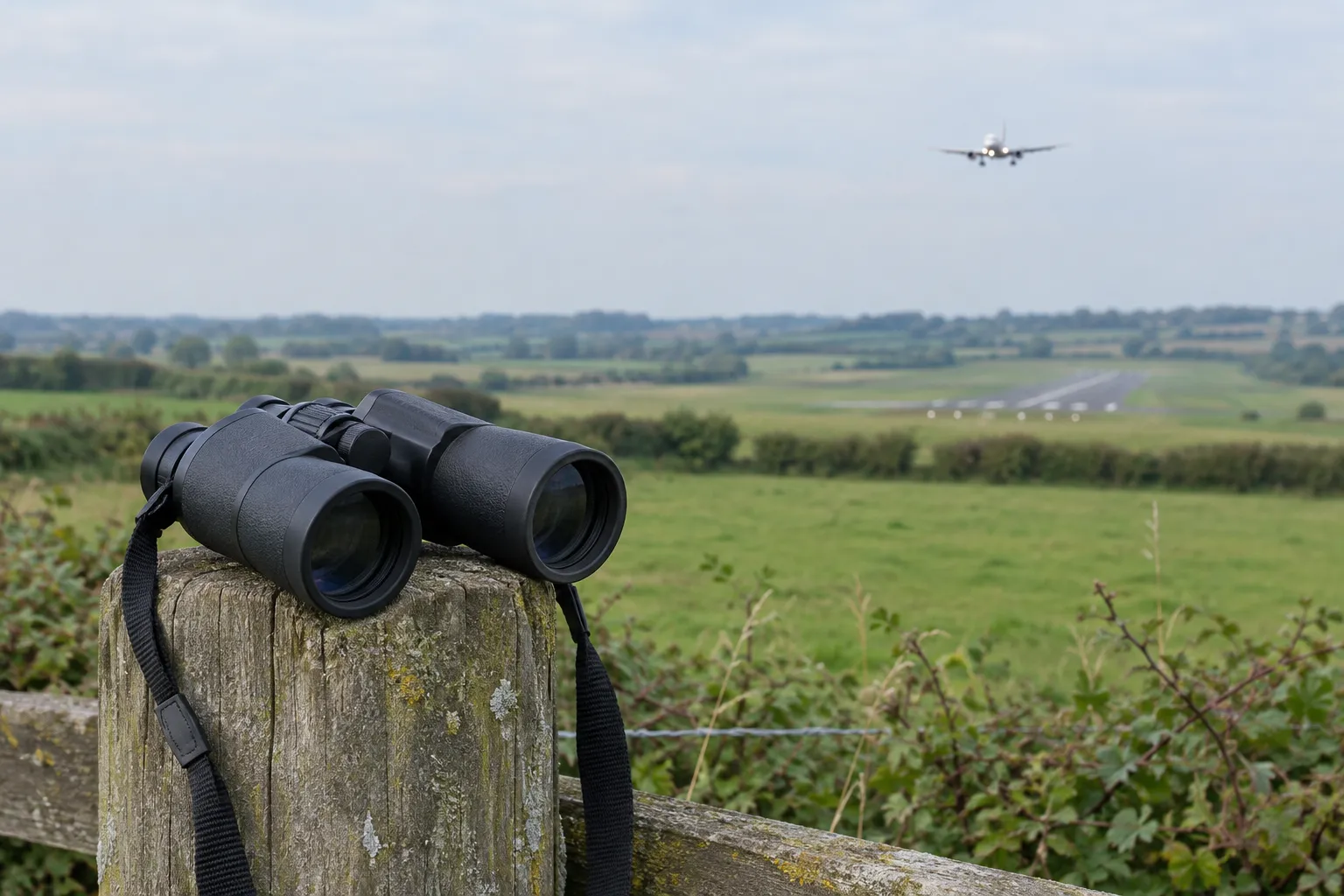
Nikon’s binocular guide separates magnification, field of view and other optical specifications. Compare the field you can comfortably see, the weight you’ll carry and the fit with your glasses if you wear them. A larger magnification number alone is not a complete buying decision.
If possible, try following a moving distant subject with the binoculars before buying. Judge comfort and ease of keeping the subject in view, not an impressive specification on a box. Weather protection matters only within the manufacturer’s stated conditions; don’t infer that every outdoor model is waterproof.
Cameras: practise before changing bodies
Work out whether you want a sharp record of the aircraft or a picture showing motion. Canon’s panning explanation describes following a moving subject while the background blurs. A slower shutter can give that effect, but it also asks more of your tracking technique; no single setting suits every pass.
The existing plane spotting photography guide goes further into picture-making. First establish a sensible visit using the UK location guide, or the detailed guides for Heathrow, Gatwick and Stansted. A tool can support an outing; it cannot authorise access. New to the hobby? What plane spotting is starts from the beginning, and turning plane photos into wall art covers what to do with the pictures.
For the spotter who already has the kit, a gift for a plane spotter is the next page to read.