Plane parts, explained: what each part of an aircraft does
The main plane parts are the wings, which make most of the lift, the fuselage that holds everything together, the tail that keeps the aircraft flying straight, and the engines or propellers that provide thrust. Hinged sections on the wings and tail are what the pilot uses to steer.
The main plane parts: wings, fuselage and tail
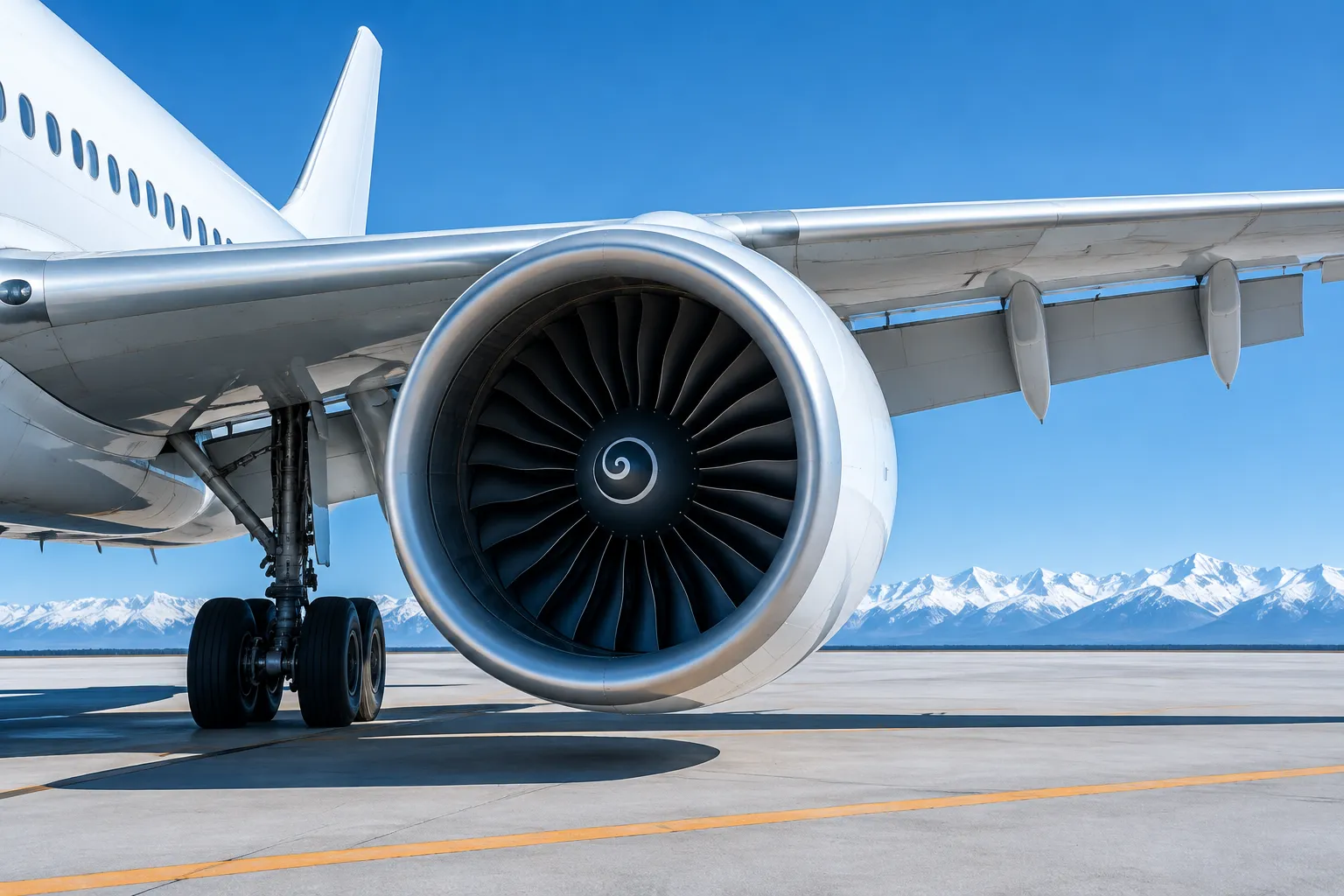
NASA Glenn's guide to airplane parts and function takes a turbine-powered airliner as its example, and warns that individual aircraft may be configured quite differently. On that airliner the wings generate most of the lift. To make lift the aircraft has to be pushed through the air, and the air resists as drag. Modern airliners use winglets on the wing tips to reduce drag, while the engines beneath the wings supply the thrust. Smaller, low-speed aeroplanes use propellers instead.
The fuselage is the body, and it holds all the pieces together. The pilots sit in the cockpit at the front, which is the subject of what an aeroplane cockpit is, and passengers and cargo travel in the rear. Some aircraft carry fuel in the fuselage and others in the wings.
The tail is a pair of smaller wings. NASA describes a fixed horizontal stabiliser, which prevents the nose bobbing up and down (pitch), and a fixed vertical stabiliser, which stops it swinging from side to side (yaw). Their job is stability: keeping the aircraft flying straight.
Elevator, rudder and ailerons: the moving parts that steer
At the rear of the wings and stabilisers are small sections attached by hinges. Changing the rear portion of a wing changes the force it produces, and that is how the aircraft is controlled. The hinged part of the horizontal stabiliser is the elevator, which deflects the tail up and down. The hinged part of the vertical stabiliser is the rudder, which deflects it left and right. The outboard hinged part of each wing is the aileron.
NASA's ailerons page says they usually work in opposition: one goes up while the other goes down. The wing whose aileron is deflected down gains lift and the other loses it, so the aircraft banks. NASA is explicit that aeroplanes turn because of the banking the ailerons create, not because of rudder input.
Flaps, slats and spoilers
The wings also have hinged rear sections near the body called flaps. They're deployed downward on take-off and landing to increase the force the wing produces, and on some aircraft the front part of the wing deflects too. Those are slats. Spoilers are small plates that disrupt the airflow over the wing and cut the lift when they're deployed. Most airliners can also be rolled using spoilers, and on landing they help slow the aircraft and counteract the flaps once it's on the ground. NASA's suggestion is to watch the wing change shape next time you fly.
How a turbofan jet engine works
NASA's page on the turbofan engine walks through it. Air is captured by the inlet. Some of it passes through the fan and on into the core compressor, which increases the pressure of the air before it reaches the burner. In the burner the air is mixed with fuel and burned. The hot exhaust passes through the core and fan turbines and out the nozzle. The rest of the air goes through the fan and around the engine, and the ratio between the two is the bypass ratio.
A turbofan therefore gets some of its thrust from the core and some from the fan. NASA says the core's fuel flow changes only a little when the fan is added, so the engine produces more thrust for nearly the same fuel. High-bypass turbofans are nearly as fuel-efficient as turboprops, and because the enclosed fan works efficiently at higher speeds, turbofans are found on high-speed transports and propellers on low-speed ones.
Propellers: wings that spin
NASA's propellers page says the blade is shaped like an aerofoil, and the spinning motion creates a pressure difference across it. That accelerates a large amount of air through the plane of the propeller, and the reaction produces thrust. So a propeller blade works on the same principle as a wing, which how planes fly explains.
Where to go next
Layouts differ between aircraft families; types of aircraft sorts them by category, and reading an aircraft's markings covers the outside. The blueprint style in aircraft art styles explained is a technical-drawing look that suits a side-on photograph where the wings, tail and engines are all visible. The wider reading sits in the sky.