The Concorde aeroplane: history, why it stopped flying and where to see one
The Concorde aeroplane was built by Britain and France under a treaty signed on 29 November 1962. It first flew on 2 March 1969, carried fare-paying passengers from 21 January 1976, and stopped when British Airways ended its flights in October 2003. Five UK sites show a Concorde.
The Concorde aeroplane: from treaty to first flight
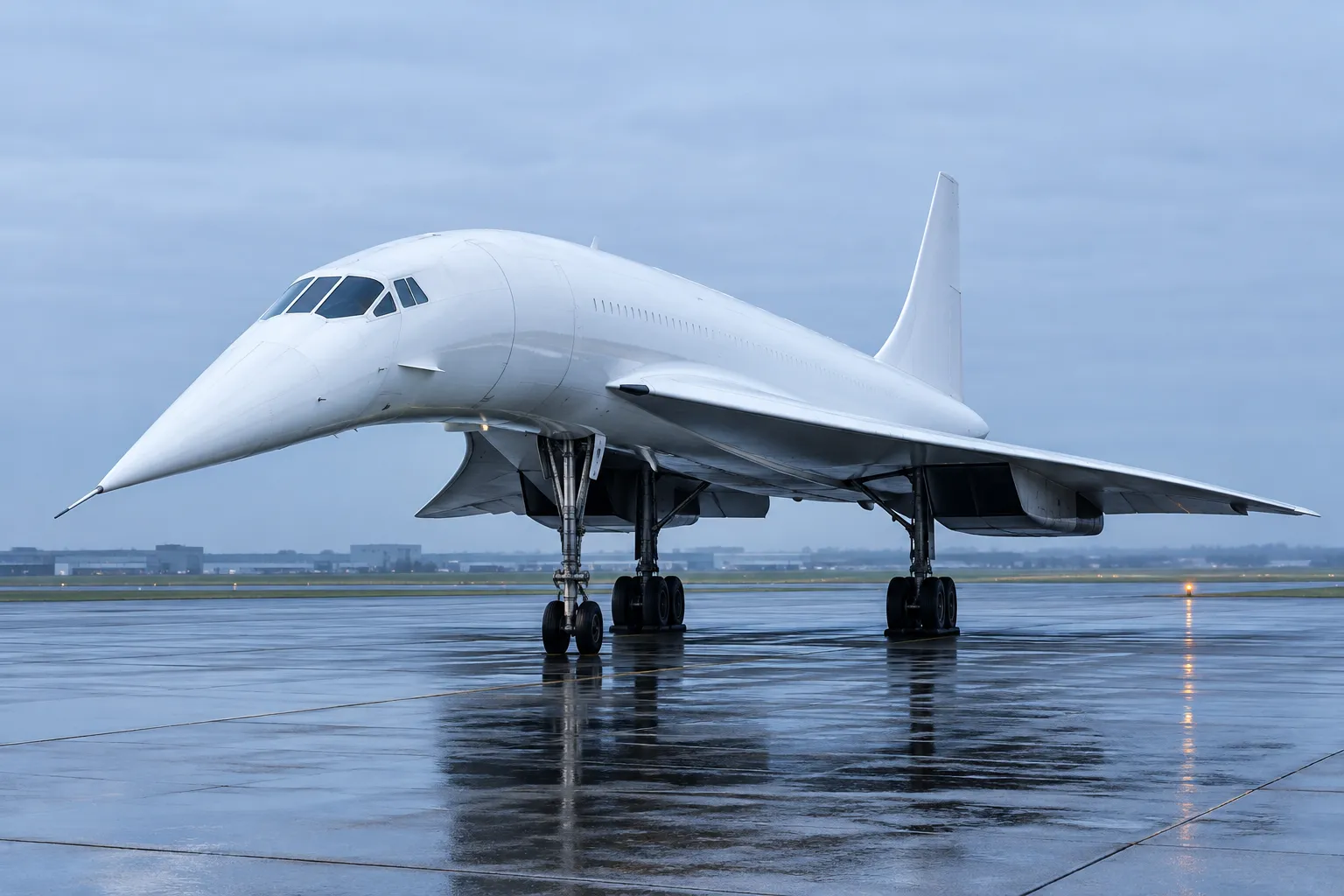
National Museums Scotland says Britain began investigating a supersonic passenger aeroplane in the 1950s, and that the Anglo-French treaty to build one was signed on 29 November 1962. The name came from the French President, Charles de Gaulle, using the word for the project in a speech; in French it means agreement or treaty.
The first flight was on 2 March 1969, when the 001 prototype took off from Toulouse. The British-built prototype, 002, flew from Bristol's Filton airfield a few weeks later. The Science Museum Group's entry for prototype 002, G-BSST dates its maiden flight to 9 April 1969, flown by Brian Trubshaw, and Concorde's first supersonic flight to 1 October 1969.
Flying on Concorde: the service years
Commercial flights began on 21 January 1976, with a British Airways Concorde flying London to Bahrain and an Air France one flying Paris to Rio. The Science Museum Group says the aircraft cruised at Mach 2.0 and 60,000 feet, cutting the London to New York journey to about three hours. National Museums Scotland adds that the Mach meter at the front of the cabin showed speed in units of the speed of sound, not miles per hour, and how fast planes fly explains why the two aren't interchangeable.
National Museums Scotland counts more than 2.5 million passengers who flew supersonically on Concorde, and says British Airways' fleet made close to 50,000 flights, clocked more than 140,000 flying hours and covered 140 million miles between 1976 and 2003. It gives the standard London to New York return fare in 2003 as £6,636.
Aerospace Bristol's history of G-BOAF records her making the fastest transatlantic crossing by a commercial aircraft on 1 January 1983, New York to London in 2 hours 56 minutes 35 seconds. Guinness World Records has its own entry for the fastest Atlantic crossing: a British Airways Concorde took 2 hours 52 minutes 59 seconds from New York to London on 7 February 1996, averaging over 2,011 km/h (1,250 mph).
Why did Concorde stop flying?
Several things came together. On 25 July 2000 an Air France Concorde crashed shortly after take-off from Paris Charles de Gaulle. National Museums Scotland records that 100 passengers, nine crew and four people on the ground died, and that both airlines grounded their fleets. Aerospace Bristol's account attributes the accident to a small metal panel that had dropped from the previous aircraft to use the runway: it burst a tyre, a fragment ruptured the under-wing skin and the leaking fuel was ignited by an electrical spark in the wheel well.
Concorde returned to commercial service on 7 November 2001, after modifications that Aerospace Bristol lists as non-zero-growth tyres, Kevlar-lined fuel tanks and insulated wheel-well electrics. Aerospace Bristol says the first operational assessment flight for the return to service took place on 11 September 2001, the day of the attacks in the USA, and that the sharp downturn in the airline market that followed led to the fleet's withdrawal two years later. National Museums Scotland says empty seats meant Concorde had reached the end of the road, and that British Airways announced on 10 April 2003 that it would retire its seven Concordes.
The Science Museum Group adds the longer view. Because of development costs, environmental and economic concerns and the noise of the sonic boom, it says Concorde was never financially viable. Air France stopped flying her in May 2003 and British Airways in October 2003. G-BOAF's landing at Filton on 26 November 2003 is the flight Aerospace Bristol records as the final one by any Concorde.
Where to see Concorde in the UK
Hours, prices and whether you can board change, so check each museum's own page.
- Aerospace Bristol, Filton: G-BOAF, which Aerospace Bristol calls the last Concorde built and the last to fly. It moved into its purpose-built hangar in February 2017, and the museum opened to the public that October.
- Brooklands Museum, Weybridge: "Delta Golf", which visitors see on the museum's guided Concorde Experience.
- Runway Visitor Park, Manchester Airport: G-BOAC, visited by booked guided tour only. Plane spotting at Manchester Airport covers the park.
- Fleet Air Arm Museum, Yeovilton: prototype 002, G-BSST, which the Science Museum Group says retired to Yeovilton on 4 March 1976 after 438 flights, 196 of them supersonic.
- National Museum of Flight, East Fortune, Scotland: G-BOAA, which National Museums Scotland says travelled north by barge in 2004 and which the museum describes as Scotland's only Concorde. Its Concorde Experience invites visitors to climb aboard.
Each registration above is a UK G- mark of the kind plane identification explains.
Photographed one yourself?
A drooped nose is easy to frame in a hangar and hard to forget. Polished metal and a sharp silhouette suit the blueprint and line-drawing looks in aircraft art styles explained, and the Lockheed Constellation is another airliner worth the same treatment. The rest of the reading sits on the sky.